US$26.7M
FY30E net revenue.
Management target
It signs one 10 year lease with the landlord and one matching lease with the customer, and earns the monthly spread between them. The customer’s own deposit and bank letter of credit secure both, a factory-built facility is delivered turnkey, and the landlord pays for the build. Carv holds no hardware and funds no construction.
FY30E net revenue.
Management target
FY30E EBITDA.
Management target
To notice to proceed across ten sites by FY30.
Plan, FY27 to FY30
Runway facility to fund the team to the first fees.
The raise
Sources: CBRE, North America Data Center Trends H1 2026, 27 Aug 2026. JLL, 2026 Global Data Center Outlook, 5 Jan 2026. Market detail is in the investor presentation.
Carv sits in the middle of two mirrored leases. Select any party to see its role.
Option or LOI on powered land, with reassignment of capacity agreed.
Brief AISPEX and obtain its price: closed loop liquid cooled.
Landowner fixes the lease rate, power included.
Financials, bank relationship, proof of funds.
Both leases together, each conditional on the other.
Customer funds its deposit and posts security first.
Landlord pays for the build; Carv collects before it pays.
Hold the spread, or sell the position for cash.
US$250 upstream and US$325 downstream per kW-month, 10 year term both ways. The same US$75 spread drives the plan.
| Per kW-month | Per month | Per year |
|---|---|---|
| Downstream rent from customer: US$325 | US$1.95M | US$23.4M |
| Upstream rent to landlord: US$250 | (US$1.50M) | (US$18.0M) |
| Spread: US$75, 30% on upstream cost | US$0.45M | US$5.4M |
| Over the 10 year term | US$54.0M | |
| Upstream rent over the term | US$180M |
Months of upstream rent covered. 6,000 kW at US$250 is US$1.5M a month
More than five times the assumed 2 to 3 month re-let. This is the credit support the landlord’s lender needs to finance the build.
A funded buyer, not investment grade, that brings a bank letter of credit and a large deposit. We screen for this before any non-refundable commitment. A buyer that cannot post security is not a Carv customer.
Case study modelled on a current market transaction with the parties removed; figures are rebased, rounded and illustrative, power included. Deposit and letter of credit terms reflect testing with compute buyers.
Spread income on live capacity is the engine, and development fees pay the bills while the first sites are built. EBITDA turns positive in FY28.
Net revenue and EBITDA, US$M
| US$M | FY27E | FY28E | FY29E | FY30E |
|---|---|---|---|---|
| New MW to notice to proceed | 6 | 12 | 18 | 24 |
| Live MW at year end | 0 | 6 | 18 | 36 |
| Development fees | 0.6 | 1.2 | 1.8 | 2.4 |
| Spread income | 0.0 | 3.6 | 10.8 | 24.3 |
| Net revenue | 0.6 | 4.8 | 12.6 | 26.7 |
| Operating costs | (0.8) | (1.6) | (2.4) | (3.2) |
| EBITDA | (0.2) | 3.2 | 10.2 | 23.5 |
| Downside EBITDA | (0.5) | 0.2 | 2.1 | 6.1 |
Ten sites averaging 6 MW; US$75 per kW-month spread; US$100K per MW development fee at notice to proceed; each site live about 12 months after notice to proceed; all-in operating cost US$0.8M for each site signed. Downside: half the MW and a US$50 spread, with costs held at plan. Over ten year leases, net revenue builds to US$818M cumulative, FY27 to FY37 (US$795M recurring spread, EBITDA US$787M). The full build, sensitivities and ten year view are in the financial projections.
The investor funds the runway until Carv is self funding. Shares are issued as each draw is made, at a fixed US$4M post-money valuation, up to 30%.
Runway facility, drawn monthly net of fees received.
Cap, or 18 months from first close, whichever comes first.
Maximum ordinary shares, at a fixed US$4M post-money valuation.
Shares issued, by when the first fee lands
Use of the US$0.8M
First year draw: US$0.2M in the plan (5% of the equity) and US$0.5M in the downside (12.5%).
The return line is a share of company EBITDA before tax, dilution and any reinvestment. It is not a cash distribution or a forecast. Illustrative terms for discussion, subject to securities counsel and agreed documentation. A general introduction for prospective investors, not an offer or solicitation to buy or sell any security. Any raise would be made only through a registered party under applicable securities laws. Take your own legal, tax and financial advice.
Screen first. Deposit and bank letter of credit required before any non-refundable commitment.
Customer security delivered direct with a recognition agreement. Limited recourse to Carv; terms negotiated per deal.
Transferable standby letters of credit are unproven at scale. Confirm with the bank partner before the first site; fall back to a larger cash escrow.
About US$1.8bn of rent over 10 years across 60 MW, against US$540M of spread. Back to back, secured by deposit and letter of credit.
Same term both sides. Security covers about 16 months of rent against an assumed 2 to 3 month re-let.
The fee at notice to proceed offsets draws. At the 18 month longstop, drawdowns and equity stop.
Also managed: disintermediation, delivery partner capacity and late delivery, AI demand cycle and customer concentration, key person, and regulatory and licensing. The full risk table is in the investor presentation.
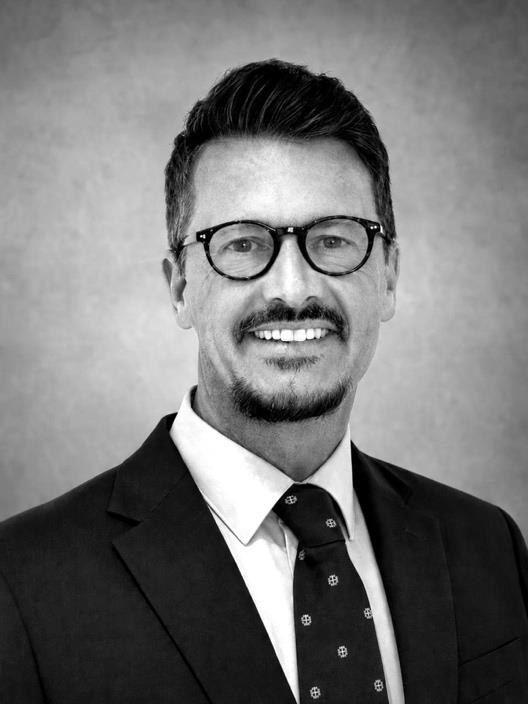
Chartered Surveyor with 30+ years leading large scale infrastructure delivery, investment and capital structuring across the GCC, and more recently, AI compute and powered land development in the US. He has worked on both sides: as a government executive shaping the framework, and as a private sector leader deploying capital within it.
Aggregate portfolio experience.
Committed joint investment secured.
Years of experience in infrastructure, investment and capital structuring.
The raise funds the core team, a bank and credit partner and legal counsel.
Four documents, from one page to the full presentation. Strictly confidential and for discussion only. Please do not forward them without our permission.
The full investor deck: the market, the structure, the security package, the plan, the raise and the risks.
DownloadThe model in brief on a single page: the gap, the structure, the security, the delivery and the terms.
DownloadThe case in two pages: why now, how a deal works, the 6 MW case study, the outlook and the capital formation.
DownloadThe FY27 to FY30 outlook in detail: revenue build, unit economics, downside case, sensitivities and the ten year view.
DownloadThis site is password protected. Enter your access code to continue.